
Superpowers and Prayer

Superpowers and Prayer

I used to dream that I had the super-power to make things happen according to my will. As a preteen and teen, I remember imagining what it would be like if I could fly, move things with my mind, or could create things out of thin air. It was always fueled by fantasty sci-fi books and the really wild dreams I would have at night (perhaps linked to the sci-fi books?). As I got older though, I put those dreams away. I began to listen to the world around me and began to believe that those childish fantasies needed to be put away so I could find my place in the adult world.


GospelCenteredCounseling - Superpowers and Prayer - I wonder now at my foolishness. Not at the imagining of grandiose things, but at my belief that I needed to put those away rather than realizing the power that was available to me.  Later on, I came upon the power of prayer. I began to realize that there was a power I had never fully tapped into before. Sure, I had prayed before. But I often just went through the motions of prayer and asked for those things I thought I was to ask for. I said the right things but didn’t really expect much. It was just something a Christian does, right?

God likes to take the box we place Him in and show how it’s too small for Him. He began answering the prayers I had routinely asked for and made it clear that He was the only way that those prayers could have come about. I remember coworkers who didn’t even believe in God seeing God move in ways that they couldn’t explain. I smiled and shared how it happened while inside I was blown away. I marveled at what God was doing! Why hadn’t someone told me this would happen?! That if I asked God for something, He wouldn’t be content in just letting me believe He wouldn’t give it to me? This was bigger than even my childish fantasies as a child!

Did you know that there are over 650 prayers recorded in scripture? Each has something to teach us. But here is the first tidbit I would share with you. Prayer is not about having power. Prayer is about God having power and responding to you.

My childish dreams led me to believe that I had power. That something intrinsic in me could change the world. As I got older, the darkness of depression and suicidal thoughts were in part, a result of coming to believe that I had no power. That I was subject to whatever forces were around me and that I had no control. Then God showed up. And I realized both were true. There is nothing intrinsic in me that can change the world. But there is a power that is available to me; through Christ. The power is there. It’s not a fantasy or some childish delusion. It’s not about me having power, it’s about God having power and responding to my prayer.

Imagine having an all-powerful, loving, all-knowing God listening to everything you are asking for and just waiting to respond. Isn’t that a power worth cherishing and daydreaming about? Isn’t that the heart of prayer we see in scripture? Pray. And relish in the delight of the super-power given to all those who follow Christ! Pray!

Dear Military Spouse

Gospel Centered Counseling - Memorial Day - Dear Military Spouse

Dear Military Spouse,

This is the day in our nation that we take to remember the ultimate sacrifices given by those who serve our country in the military. Today is a day of remembrance and gratitude. As I praise God for the sacrifices made for our country, my thoughts and heart turn to you.

This weekend has been filled with luxuries for my family and I. We enjoyed a birthday party where we watched whatever movie we desired, praised God in a house of worship that we chose without fear of persecution, and read from a religious text that praises those who would willingly lay down their lives for their brothers. All at the expense of those who have served our country. I thank God for your spouse for they have given me much more than they receive in return. More than they will ever know. But let me turn to you for just a moment.

I know you likely have no desire for a “thank you”. You chose your lifestyle and your spouse chose their career and it is just the duty to which you both have committed yourself. You desire no praise or glory. But I could not live with myself if I did not say something, if I did not offer some small gesture of the gratitude with which my heart is filled when I think of you. Of the long nights you endured wondering if your spouse would ever walk through your front door again or if you’d find two other service members silently pounding on your door. Of the times you watched as your friends were handed a folded flag while your insides shouted, “Not again!”

So to you Military Spouse, thank you. Thank you for the way you stand guard over your soldier’s home while they defend our country. Thank you for being their anchor as they keep our country afloat. Thank you for being a strong tower of refuge as they come home from another war-torn country. For being the shoulder the soldier leans on that protects my family day-in and day-out. Thank you for loving our country enough to be strong when you feel you have no strength left. For loving faithfully when our country seems to have lost all respect for what your spouse does.

Thank you for those months and maybe even years that you’ve been a “single” parent, sought to foster a relationship between your children and your spouse, and slept alone at night. Thank you for those times spent awaiting your soldier’s return only to find that they’re still caught up in what happened while they were gone. Thank you for supporting the brotherhood that keeps their unit strong even when it interferes with your own relationship with them. Thank you for dealing with the brokenness your soldier will experience time and again, long after their service is done. And thank you for expecting nothing in return.

Thank you for teaching me what it means to die to self everyday. Thank you for teaching me about love that crosses and is deeper than oceans. Thank you for reminding me of the love Christ has for me and the faithfulness he shows me.

With all my heart, thank you. Happy Memorial Day to you and yours.


Sincerely,


Travis


3 Reasons for Gospel Centered Counseling

There’s Cognitive-behavior therapy, behavior-modification, narrative-therapy, and a rather long list of other types of counseling theories. Why then is Gospel Centered Counseling something worth advocating? Isn’t it just another way of helping people like all the others?

1. Gospel Centered Counseling is THE Counseling Theory

When God created man and we experienced our first problem (sin), God shared the good-news. The garden was perfect, we lived in perfect relationship with God, but we rebelled. We did exactly what God told us not to do. But despite the rebellion, God promised that,

“I will put enmity between you and the woman, and between your offspring and her offspring; he shall bruise your head, and you shall bruise his heel,” (Gen 3:15; see also Romans 16:20).

This is called the protoevangelion, or the first instance of the good-news. Our first problem was disobeying God (sin), and the first solution God offers is that the serpent would be crushed (through Christ!). This is exactly what we needed to hear! God didn’t first deal with man’s rebellion, or woman’s rebellion, but rather with the serpent. That’s grace!

The Gospel was the first solution to man’s biggest problem. But it also is the source of man’s greatest hope. Since our creation, man has longed for the perfection we were designed for and to live eternally. We have feared death and take sorrow in many of the results of our rebellion. We long for purpose and identity, for a source of strength beyond ourselves. The Gospel provides all of this and so much more.

2. Gospel Centered Counseling Has the Longest Reach

Motivation is a key-word in counseling. Any counseling theory is going to have to ask the question, “Why does a person do what they do?” From the Christian worldview, a person does what they do because of what’s in their heart. Consider Proverbs 27:19;

“As in water face reflects face, so the heart of man reflects the man.”

Or how about Jesus’ own words when discussing what defiles a man in Matthew 15:19;

“For out of the heart come evil thoughts, murder, adultery, sexual immorality, theft, false witness, slander. These are what defile a person…”

Gospel Centered Counseling deals with the heart, out of which a man’s actions flow. Cognitive behavior therapy attempts to do this by adjusting one’s thoughts, but has no anchor to which those thoughts should be tied to the heart. Behavior-therapy attempts deal with the symptoms rather than the problem. Each of the theories fails to reach where the Gospel’s light touches every-time.

Gospel Centered Counseling - Heart - Sun shine


3. Gospel Centered Counseling Causes Death

When dealing with addictions, anger, frustration, bitterness, marriage issues, or issues at work, we often are operating out of selfish-motives. Rather than seeking to utilize those selfish motives and channeling them into productive behavior, Gospel Centered Counseling causes those selfish motivations to die and instead places the Maker’s motivation at the fore-front of the person’s desires.

So when the time comes for a hard decision to be made, and the choice is between doing what feels good or what is hard, a person will not necessarily default to what feels good, as they seek to honor the one that died for them. The hope of eternity gives strength to endure the harder choices in life.

When a person is committed to the Gospel, and is confronted with the choice between chocolate cake or hummus and carrots after years of poor eating habits that have led to health problems, they will be able to die to self and choose the carrots as an act of worship. Or when a person has worked towards a career for a decade and finally offered the position, but realizes that by accepting they would cause a great deal of hurt to others, they can choose to not accept the position. Gospel Centered Counseling allows a person to die to their own desires and embrace a higher motivation.

Counseling and Motivation

Counseling and Motivation

I believe the motivation of counselors today is fundamentally flawed; especially counselors within the church. I believe that because the motivation is wrong, counselors are finding fewer and fewer opportunities to really help people, are burning out quicker, and are training others in a motivation system that leaves new counselor’s wanting for something more. Let me elaborate on why I feel this way.

I remember when I first started to feel the call on my life, I listened to a handful of different pastors complain that they felt that they could better utilize their time by preparing for the sermon, or doing evangelism, rather than sitting in a counseling room. I remember one specific conversation I had with a pastor that I still think very highly of; “Counseling can often be a struggle because people don’t really want to change and don’t really want to listen.” I saw this motivation and said, ‘Then why would I ever want to do counseling?’ My whole concept of the calling on my life was changed because I believed that counseling was ineffective.


What I have noticed over the years is that the counselee enters into the room with the expectation of being helped through a struggle by the counselor. The counselor then accepts this agenda from the counselee and says, “I’m there because I’m supposed to help them through this issue.” Counseling has become a place where people help people. But counseling was meant to be an opportunity for people to glorify God by letting God help people. It seems a minor change of motivation, but it is anything but minor in the way it impacts the way a counselor behaves in the counseling room.


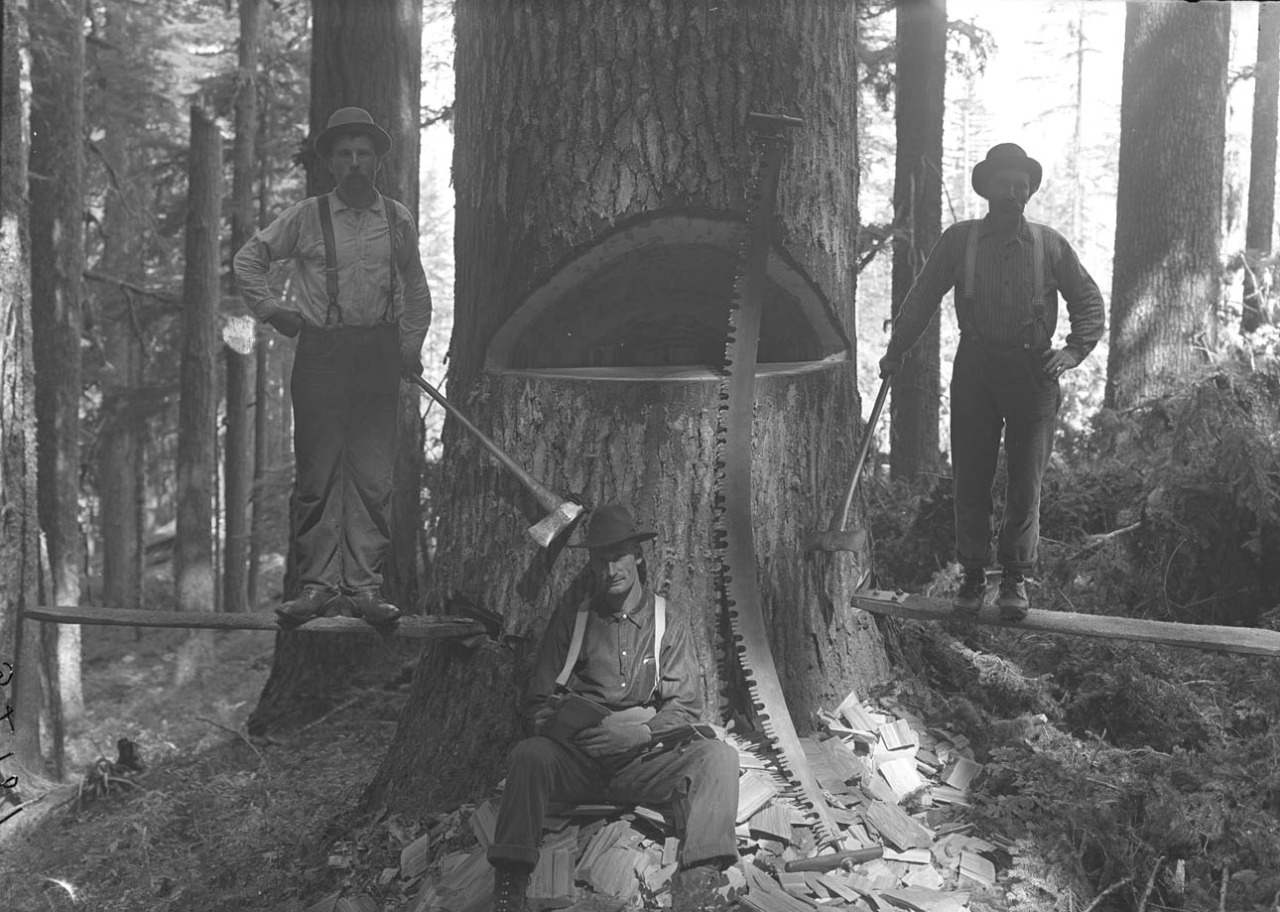
Gospel Centered Counseling -  Chopping a Tree Down - Counseling and Motivation


If a counselor believes that counseling is about people helping people, then when a problem arises that they are uncertain of how to handle, they will seek to answer the problem with their own solution. They will try to cut away at the problem down and find that it is a great deal harder than they originally planned. When the counselor believes that they are there to glorify God, they may find that the answer to the perplexing problem is found in prayer, where they can connect with the wisdom of God. A counselor who believes that counseling is about letting God help people, may see opportunities to strengthen people’s character and moral resolve through hardships, while the counselor who believes counseling is about people helping people is more likely to seek out the path of least resistance to a solution.

If you are a counselor, and you are seeking to be effective, examine your motivation. Are you entering into the counseling room because you want to help people, or because you think there is an opportunity for you to glorify God? If it’s the latter, it is likely to mean that there are times when the answer to a problem is only to mourn with those who mourn. At other times, it’ll be harder because you’ll have to accept that sometimes, the answer to a problem is just to have faith despite the counselee begging for relief from their pain. When you counsel with the gospel in mind, God’s glory is the focus of counseling, not our desire to help others, see people “live right”, or even a desire to fix what’s wrong in the world. When you counsel with the gospel in mind, sometimes pain has to be embraced rather than “resolved”. If we can enter into the counseling room with an intent to glorify God, maybe we’ll find that the problem is completely uprooted without any effort from us. Maybe counselors will find joy in the counseling room no matter what happens in the counselee’s life. And maybe, just maybe, successive generations of counselors will be more concerned about bringing God glory than shaping their theology to fit what people want.

Community and Counseling

Community and Counseling


Gospel Centered Counseling - Christian Counseling - Community in Counseling

Our culture has flipped the purpose of community and counselor’s on their head. Today, it is expected that when you visit a counselor, you should be able to expect some level of healing, if not complete restoration. While our culture teaches us that community should be a place where you get a little help here and there with practical things like moving. But Christ sets things right-side up again. He points out that the body is meant to be the support system and the counselor a small part in healing.

Romans 12:4-6: “For as in one body we have many members, and the members do not all have the same function, so we, though many, are one body in Christ, and individually members one of another. Having gifts that differ according to the grace given to us, let us use them…”

When the body feels a “pain” or is sick, the counselor helps direct the body in healing itself by giving a blueprint for healing. That’s his gift, connecting people to the Creator’s plan for healing. Each of the roles serve a purpose, but together as a whole community, a person finds healing.

In counseling, a person is looking for healing and restoration. They go to the counselor, mistakenly expecting the counselor to provide that healing. The counselor then has to point them to Christ to find healing. Scripture shows us that Christ reveals himself in community. If we want to see the healer of all wounds, we have to meet him where he reveals himself to be.

Hebrews 10:24 “And let us consider how to stir up one another to love and good works, not neglecting to meet together, as is the habit of some but encouraging one another, and all the more as you see the Day drawing near.”

Matthew 18:20 “For where two or three are gathered in my name, there am I among them.”

A Healing Community

Being gathered in Christ’s name is the key to a healing community. However, just going to church and sitting in a seat listening to a sermon and some songs and then going home is not what meeting in His name means. Being gathered in Christ’s name means making an effort to represent Christ. When the body is focused on representing Christ, healing comes naturally.

A pastor I’m close to recently said, “Sunday mornings just aren’t enough.” Sunday mornings are a great START to being a community. It gives us an opportunity to reorient our hearts to focus on Christ. But it’s not enough. We need to be in regular community throughout the week with people who are meeting in Christ’s name.

Are you hurting? Is there pain in your life? Then seek out a counselor or pastor, but don’t neglect finding a community of Christ-followers who meet in His name. Don’t cut yourself off from the body that will be where you find the most healing.


Travis Stockton is a counselor with Lafayette Community Church in Lafayette Indiana. He graduated from Grace College Magna Cum Laude with a B.A. in Counseling and Bible and obtained his M.A. in Pastoral Counseling from Liberty University. He is married to a woman full of grace and the father of two children.

Freedom from Addiction: Pornography

Freedom from Addiction: Pornography

Sex permeates our society. It’s used to sell everything from internet service providers to sandwiches. So, when we talk about addictions, pornography is one addiction that is easy to point to. Unfortunately, it’s easy to point to because it’s such a problem in today’s society and church. It’s a weed that grows out of our selfishness and takes over God’s garden that we were intended to care for.

As a preteen, I was exposed to pornography and quickly found myself addicted. I was powerless to overcome it. I found that the more I dove into the addiction, the less I valued myself and my addiction. It became an endless cycle of depravity inspiring more depravity. While I could not stop my tail-spin into sin, Christ lifted me up out of it when I accepted that His will for my life was better than my own.

If you don’t understand how addictions work, you might want to read an introduction to the dichotomy of addictions. Here’s the application of the dichotomy of addictions to pornography. Initially, pornography begins growing it’s roots into a person’s life through the biological stimulus it provides. But like a weed, it quickly adapts itself to grow into whatever soil it finds in the soul. Some men seek comfort while some women seek companionship. Pornography adapts itself to be whatever the person wants it to be then takes control of the individual.

Weeding - Addictions - Pornography - Gospel Centered Counseling
Image courtesy of studyprayserve.com.

Victory in Christ

Let me share with you some practical ways the Gospel has freed me and continues to free me.Gospel Centered Counseling - Love God Love Porn

1. Love God: Embracing my love of God, allowed me to let go of my love for porn. Loving God more than porn was what gave me the ability to step away from that which separated me from God.

1. Removing the weed: Some call it radical amputation and is based on Matthew 5:27-30. The principle is to remove any opportunity for the weed of lust to grow. For me it meant not being on the computer any more than I had to be, stop watching t.v., and avoid going down certain aisles in the grocery store.

2. Produce Fruit: Producing fruit means we replace the weed with something that actually produces fruit; prayer, Bible study, fellowship, or serving all work. For me, Bible study and prayer were what produced the fruit that I valued more than porn.

4. Seek out that seed: What started it all? Abuse, self-image issues, loneliness, boredom, grief? Find even this seed and replace it with the seed of truth. You are a new creation, filled with The Holy Spirit, and created for a higher purpose!


Victory in Christ is accepting that while the temptation may still be there,

Christ is more desirable and fulfilling than your addiction.

Freedom from Addiction: The Dichotomy

Freedom From Addiction: The Dichotomy

As a teenager, I had found myself seeking self-identity and self-pleasure in a number of addictions; food, pornography, and video games were a few of those I sought solace in from the pain of the world around me. It wasn’t just a place to enjoy myself, it was a place to escape the harsh realities of the world that I didn’t know how to deal with. When I was sad, lonely, or even just seeking a bit of adrenaline to get me through the next 24 hours, I’d indulge in an addiction, usually more than one repeatedly. Pornography was one of the more harmful addictions I had. But Christ has freed me from those. Today, I get to celebrate the freedom in Christ I so desperately needed.

Freedom in Christ - Gospel Centered Counseling - Addictions  - Dichotomy


Every counselor has an assumption or many assumptions of what makes up a human being. These assumptions then translate into how they seek solutions to the issues we deal with as human beings. As a Gospel Centered Counselor, my assumptions are the following:

  1. We are both body and soul (physical and non-physical).
  2. We were created for eternal perfection in mind.
  3. We turned away from God’s design and embraced our own autonomy through sin.
  4. Sin’s hold on us is broken through faith in Christ.

These four basic assumptions shape how I deal with addiction as a counselor. Every addiction has a reason that it is an addiction for someone. For some, it’s primarily a physical addiction. Consider smoking as an example. Smoking often is rooted in a biological response to nicotine. However, just because our body is the primary factor in the addiction, doesn’t mean that there are not spiritual factors involved. Nervousness, boredom, a desire to be accepted by other people, etc. can all supplement a biological drive for addiction that all have to be dealt with.

Gospel Centered Counseling - Addictions - Smoking

But some addictions are rooted in a spiritual cause. For example, the addiction to pornography, while a response to physical stimulus, often draws a person into the addiction ever deeper with a false promise of self-fulfillment, joy, or significance. In these instances, it is the biological factor that is secondary to the spiritual component. In these addictions, a person must deal with issues of the heart to break free from the addiction, whereas primarily biological addictions don’t require digging into the heart to break free.

The good news is, whether the addiction is biological or spiritual, Christ came to break us free from all addictions that we would love Christ with all our heart and our bodies. If you are reading this and struggling with addiction, know the power Christ has to free you from it. You have only to submit to Him to be free!


The Freedom We Had: The Freedom We Need

The Freedom We Had: The Freedom We Need

Liberty and the Gospel - Gospel Centered Counseling


Tomorrow is the 4th of July; a holiday often celebrated because of the hard-fought liberty that we won from an oppressive and tyrannical government. A holiday that commemorates the lives lost in pursuit of something our county had come to know spiritually through freedom in Christ, but needed to experience on a civic level to grow in our faith. July 4, 1776 was the day that we declared with the Declaration of Independence, that we would not be ruled by an oppressive government and would not submit to laws and rules that infringed on the freedoms given by God himself. We were a stronger people then. We cared and loved a lot differently than we do now.

Fast forward to tomorrow. Tomorrow we celebrate the 4th of July for our 239th time. Tomorrow, we will shoot off fireworks, dance in streets, and let the holiday go down with a burger, and perhaps a cold beverage or two. But the freedom this holiday once stood for has been flipped onto it’s head. No longer are we celebrating the freedom from a tyrannical and oppressive government, but now we celebrate the freedom from morality; from religion.


In light of the Supreme Court’s ruling on Obergefell v. Hodges, we can fairly say, without any panic or horror, that we have traded the freedom we had, for the freedom from religion. But as Christians, the reality is neither one of these forms of freedom is the freedom our country needs. The freedom needed is the freedom that our country was founded on from the very beginning; freedom in Christ.

The freedom we had as a nation to practice our faith as we saw fit, now is being replaced with a government that increasingly will dictate to all people how they are to live their lives. But we as Christians have something that is still worth celebrating; it’s the freedom we need. Freedom in Christ means that no matter how oppressive our government is or will be, we can live with love in our hearts. We can have hope for the future, because in the end, all will be made right. Because in the end, all those who believe will be set free.

This fourth of July, do not despair! Rejoice in the freedom Christ has provided. Shoot off fireworks, dance in the streets, and enjoy that burger and cold beverage. And perhaps this holiday, while the world continues to seek hope in empty pits of darkness, maybe…just maybe we’ll allow our lives as Christians to light up the night sky with a brilliance of colors, that draws people’s attention with love, and shakes the earth with a resounding sound of celebration. Let’s live out our mission, and shine our light for the world to see!


Devotions for Kids: Which Bible Do We Use?

Devotions For Kids: Which Bible Do We Use?

My children are still young enough that they can show me how old they are with just their hands. Yet, despite their age, we have managed to read all the way through at least three Children’s Bibles. The very act of sitting down for devotions with a child can be daunting for some, so asking the question, “Which Bible do we use?” can often be the last question on someone’s mind. Yet, it’s a rather important decision.

If you’re reading your children the King James Version (KJV) and they are as young as my children are, you may want to reconsider you’re answer to this question! If you’re reading a children’s storybook Bible to a boy who is itching his first chin-hairs, you might want to reconsider. And if you’ve read through the Bible you are using with them and the stories or morals of the story are considerably different than what you understood them to be, you may want to reconsider. Let me give you a few suggestions.

First, if your children are young, use a storybook Bible. They can condense large portions of scripture into simplified stories that they can understand. This is important if they are going to get the message of each story. This will allow truths to be conveyed, and young hearts to be impacted, without a lot of definitions, and advanced theology courses.

Second, if your children are old enough to tie their shoes, start giving them small doses of a real Bible translation. I’d encourage that you use a version that your whole family can be comfortable with, as it’ll simplify Bible memorization and catechisms if you do those sorts of things. Even if you don’t do those things, it’ll still be easier for you to answer any of their questions if you’re using the same version.

Finally, whatever Bible you choose to use, make sure you help them get excited about the stories by asking questions, thinking through the story with them, and maybe even using more than just one tone when reading the stories to them. In other words, brush up on your acting skills and make it fun!

My Suggestions

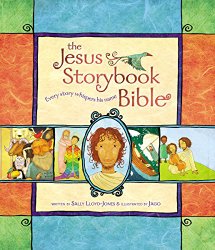
For children under six, I’d recommend The Jesus Story Book Bible. The illustrations within this Storybook Bible are very well done, the stories all point back to Christ, and they are Gospel-saturated. I’d highly recommend this Bible. We are on our third time through this Bible, and we still all enjoy it!

For children who can tie their shoes, buy them a copy of the The ESV Children’s Bible and encourage them (gently) to read portions of it (or read it with them)! Get them used to reading it regularly. As they get older, make a habit of asking them what they are reading about in their devotions or if they have any questions about what they are reading.

The ESV is just our family’s preference. We prefer a translation a little closer to the word for word translation while still having a modern sound to it. It’s a good blend for us. So, let me ask you! What Bible do you use for your children?


Obergefell v. Hodges and The Gospel

Obergefell v. Hodges and The Gospel

The internet is ablaze right now. Everyone is weighing in on the SCOTUS’s ruling on Obergefell v. Hodges. Some are responding in joyous celebration. Others are saddened, but unphased. While another group is proclaiming gloom and doom. But what does the Gospel have to say about it?

Obergefell v Hodges SCOTUS
Image courtesy of: http://www.lambdalegal.org/blog/20150227_6-things-to-know-about-todays-scotus-marriage-brief

Man

God created man (and women) in his image. Everyone who is a human being is made in God’s image. Each of us is born with an essential nature that reflects a portion of who God is; both the Christian and non-believer (including the homosexual). Therefore, each individual needs to be treated with love and respect.

But man has rebelled. Man has pumped their first in the air and said, “I’m not going to listen to you, if you’re even there!” We have become God’s enemy. Not just the homosexual, but you as well; yes YOU! So, while homosexuality is a sin, you too have sinned. And before you begin to perform surgery on that splinter in your neighbors eye, please make sure you’ve removed the log in your own eye.

Christ

I’m in desperate need of saving. Not just that one time when I accepted Christ, but every day. There are times I look at a beautiful woman and commit adultery in my heart. There are times I grow angry enough that I should be considered guilty of murder. I’m in desperate need. And so are you; yes YOU!

God knew this even from the beginning. While his permissive will allowed us to choose to rebel, it was not his declaritive will. He did not want us to disassociate ourselves from him, but rather than do nothing while we turned our backs on him, He stepped down from his throne where he was worshipped by angels and had an infinite power at his disposal, and became vulnerable. He entered into our world and despite the darkness and sin, he took on flesh that he might die a gruesome death and restore us to him.

Dear Christian, if you know of someone in any sin, whether it’s homosexuality or adultery, are you willing to die to bring them into a restored relationship with God? If not, you’re not fully embracing your role as an ambassador of Christ. Dear sinner, do you know anyone who will love you this much? If not, I’d love to introduce you to someone who does!

Hope

Know that today is a day to rejoice! Don’t let the news cause you to forget that Christ didn’t stay in the tomb! HE IS ALIVE! Truth couldn’t be held down! If you follow Christ, you already know who wins!

If you are celebrating the decision of the SCOTUS in Obergefell v. Hodges, know there is a better reason to rejoice! Forgiveness of our sins is ours for the taking! No matter your response to the Obergefell v. Hodges case, all your joy can multiply exponentially if you begin to embrace the hope already given!